
A five-judge Constitution bench headed by Justice Sanjay Kishan Kaul, in a unanimous verdict, ruled that its 2014 verdict, which had struck down a provision of the Delhi Special Police Establishment (DSPE) Act, 1946 providing immunity to such officers in graft cases, will have retrospective effect.

The Supreme Court of India has dismissed a plea seeking directions to states to take immediate action against mob lynching and cow vigilantism, particularly against Muslims. The court stated that it was not feasible to "micro-manage" such incidents from Delhi and referred to its 2018 verdict, which issued guidelines to address mob violence and cow vigilantism. The court also noted that the new Bharatiya Nyaya Sanhita (BNS) criminalizes mob lynching as a separate offence. The plea argued that there was "gross non-compliance" with the 2018 directions, but the court maintained that authorities were bound by its previous rulings.

The Supreme Court of India has dismissed petitions challenging the 1976 amendment to the Constitution that added the terms "socialist", "secular", and "integrity" to the Preamble. The court ruled that the inclusion of these terms, made through amendments, is valid and does not affect the original adoption of the Constitution in 1949.
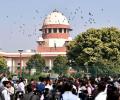
Chief Justice of India D Y Chandrachud has constituted an all-woman bench comprising Justices Hima Kohli and Bela M Trivedi to hear transfer petitions involving matrimonial disputes and bail matters on Thursday.

The Supreme Court on Thursday exercised its extraordinary constitutional powers and ordered the liquidation of grounded air carrier Jet Airways' assets. A bench of Chief Justice D Y Chandrachud and Justices J B Pardiwala and Manoj Misra set aside the National Company Law Appellate Tribunal (NCLAT) decision upholding the resolution plan of Jet Airways and approved the transfer of its ownership to Jalan Kalrock Consortium (JKC).

Disagreeing with the Centre's submission that the petitions seeking legal validation of same-sex marriage reflected an 'urban elitist' view, Chief Justice of India D Y Chandrachud said on Tuesday queerness is not urban or elite, or restricted to upper classes and privileged communities.

India's anti-corruption ombudsman, the Lokpal, has dismissed a complaint alleging corruption against former Chief Justice of India (CJI) DY Chandrachud, citing a lack of jurisdiction. The complaint, filed in October 2024, alleged abuse of office, corruption, and favoritism by Chandrachud while he was CJI. The Lokpal, in its order, concluded that sitting judges of the Supreme Court, including the CJI, are not subject to its jurisdiction under the Lokpal and Lokayuktas Act. The Lokpal stated that the Supreme Court was established by the Constitution of India, not an Act of Parliament, making it outside the scope of its jurisdiction.

The Supreme Court of India censured the Assam government for keeping persons declared foreigners in detention centers indefinitely and not deporting them. The court questioned the state's explanation for not sending nationality verification forms to the Ministry of External Affairs, stating that detainees should be deported immediately once identified as foreigners. The court directed the Assam government to initiate the deportation process of 63 declared foreign nationals whose nationality was known and file a status report in two weeks. The court also directed the Centre to provide details of those deported and how it plans to deal with detainees whose nationality is unknown.

"Are you waiting for some muhurat," the Supreme Court remarked on Tuesday as it came down heavily on the Assam government for keeping people declared as foreigners in detention centres indefinitely rather than deporting them.
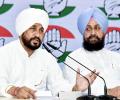
The Punjab and Haryana High Court has directed the Punjab government not to take any coercive action against Congress leader Partap Singh Bajwa till April 22 in connection with an FIR lodged against him over his "50 bombs have reached Punjab" remarks. Bajwa, the leader of opposition in the Punjab Assembly, has been booked on charges, including misleading information that endangers the country's sovereignty and unity, after being quizzed over his "50 bombs have reached Punjab" claim. The court also issued a notice to the state of Punjab on Bajwa's plea seeking quashing of the FIR registered against him over his statement.

What is the effect of the report of a commission of inquiry that has been rejected or not accepted by the government, and whether the empirical data which formed the basis of the report can be looked at while determining a constitutional issue, the Supreme Court wondered on Wednesday while considering the question of quotas for Dalit Muslims and Dalit Christians.

A majority verdict by Chief Justice Ranjan Gogoi and Justices A M Khanwilkar and Indu Malhotra decided to keep pending the pleas seeking a review of its decision regarding the entry of women into the shrine, and said restrictions on women in religious places was not restricted to Sabarimala alone and was prevalent in other religions as well.
The Supreme Court of India has ruled that foreign nationals facing criminal charges cannot be allowed to leave the country. The court emphasized the need to ensure the presence of foreigners during criminal proceedings and outlined procedures for enforcing this restriction. The ruling clarifies legal provisions related to foreigners' movements in India, particularly during bail applications.

The Supreme Court verdict on mining royalty case will give a further jolt to the Indian mining industry and will have very large financial implications, as arrears may work out to the tune of more than Rs 1.5 lakh crore to Rs 2 lakh crore, industry players said on Wednesday. The Supreme Court on Wednesday upheld the power of states to levy tax on mineral rights and mineral-bearing land, and allowed them to seek refund of royalty from April 1, 2005 onwards. According to a senior mines ministry official, the verdict will have a very large financial impact on mining, steel, power and coal companies.

The Delhi High Court has ordered Jammu and Kashmir MP Abdul Rashid Sheikh, alias Engineer Rashid, to deposit Rs 4 lakh with the prison authorities as travel expenses for attending Parliament. The court allowed Rashid to attend the ongoing Parliament session "in-custody" till April 4, but the NIA had raised concerns about him being a flight risk. Rashid has been lodged in Delhi's Tihar Jail since 2019 after the NIA arrested him in a 2017 terror-funding case.
The Supreme Court upheld the Constitutional validity of the Member of Parliament Local Area Development scheme under which members of Parliament are allocated Rs 2 crore annually for development of their constituencies.
The State Bank of India has not shared details of the electoral bonds encashed by political parties till Wednesday, the deadline set by the Supreme Court.
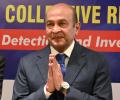
The Supreme Court collegium has confirmed the transfer of Delhi High Court Justice Yashwant Varma to his parent Allahabad High Court. This decision comes after an inquiry was initiated against Justice Varma regarding the alleged discovery of a large amount of cash at his official residence. The transfer recommendation was made public in a resolution uploaded on the Supreme Court's website. The alleged cash discovery occurred following a fire at Varma's residence in Delhi on March 14, 2025. The apex court collegium, headed by Chief Justice Sanjiv Khanna, has also constituted a three-member inquiry committee to further investigate the matter.
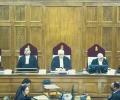
The Supreme Court of India, by a majority view of 3:2, on Monday upheld the validity of the 103rd Constitution amendment providing 10 per cent reservation to people belonging to the economically weaker sections (EWS) in admissions and government jobs.

The top court said it cannot order a roving inquiry into purchase of electoral bonds on the assumption that it was quid pro quo for award of contract.

The Supreme Court raised concerns about a potential stalemate in Tamil Nadu due to the Governor's delay in assenting to bills passed by the state assembly. The court questioned the Governor's actions, noting that he should have communicated his concerns about the bills' constitutionality to the state government. The case focuses on the delicate balance of power between the state government and the Governor, highlighting the importance of open communication and transparency in the legislative process.

It said the law must be just and fair and should protect the human rights and dignity of all members of society.
The Supreme Court of India expressed its disapproval of "scurrilous and unfounded allegations" made against judges in a petition challenging the conferment of senior designations to lawyers. The court found the plea's averments, which insinuated that judges favor their relatives in bestowing senior advocate titles, to be unacceptable. The bench offered the petitioners four weeks to amend the petition, warning that it may take further action if the offensive allegations are not removed.

Virtually reopening its Hindutva judgement, the Supreme Court has decided to expedite hearing by a seven judge-bench for an authoritative pronouncement on electoral law categorising misuse of religion for electoral gains as "corrupt practices".

Terming as 'unfortunate' the January 29 stampede at Maha Kumbh where at least 30 people were killed, the Supreme Court on Monday refused to hear a public interest litigation (PIL) for guidelines over safety of devotees and asked the petitioner to move the Allahabad high court instead.

Democracy does not begin and end with elections and the integrity of election process is pivotal for sustaining the democratic form of government, the Supreme Court said on Thursday while striking down as unconstitutional the electoral bonds scheme for political funding.

The Act prohibits conversion of any place of worship and provides for the maintenance of the religious character of any place of worship as it existed on August 15, 1947.

The Supreme Court has sought the assistance of the solicitor general of India in a plea that seeks job security for members of internal complaint committees (ICC) for sexual harassment at workplaces. The court recognized the importance of the plea and expressed concern over the lack of response from the Central government, despite issuing notice. The petitioners, Janaki Chaudhry and Olga Tellis, argue that ICC members in the private sector face a serious conflict of interest as they can be terminated without reason if a decision goes against the senior management. The petition highlights the vulnerability of ICC members to retaliation and the lack of protection they have compared to their counterparts in the public sector.
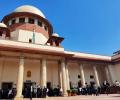
Tewari, a Congress leader and Lok Sabha MP, was appearing for former Arunachal Pradesh MLA Padi Richo, who has filed an intervention application in a batch of petitions challenging abrogation of Article 370.
A bench comprising Chief Justice Sanjiv Khanna and Justice Sanjay Kumar also indicated that it may not take up the pending scheduled petitions, heard earlier by a three-judge bench, during the day as it was sitting in a combination of two judges.

The Ministry of Corporate Affairs (MCA) is contemplating an increase to the existing strength of the National Company Law Tribunal (NCLT) benches to handle the growing case load. The ministry is currently analysing the time taken by each bench to dispose of matters and the total number of cases being handled by each bench. "We need to first determine our requirement, given that the NCLT handles both Company Act and insolvency and bankruptcy matters. "The latter constitutes the majority of the case burden.
The Mathura Shahi Masjid Eidgah Committee has approached the Supreme Court, requesting the court to prevent the central government from filing a response to a petition challenging the Places of Worship Act's constitutional validity. The committee accuses the BJP-led government of intentionally delaying its response. The court had previously issued a notice to the government in March 2021, but the government has yet to submit its reply despite numerous opportunities. The committee argues that the government's delay is intended to obstruct those opposing the challenge to the Places of Worship Act from filing their own responses. The petition also states that the pleas challenging the law's validity are scheduled for hearing on February 17, and closing the government's right to respond would serve justice. The Supreme Court previously issued a ruling in December 2022 that stopped courts from entertaining new lawsuits or issuing interim or final orders regarding the reclaiming of religious places, particularly mosques and dargahs. The ruling halted proceedings in 18 lawsuits filed by Hindu groups seeking surveys to confirm the original religious character of 10 mosques, including the Gyanvapi Masjid in Varanasi, the Shahi Idgah Masjid in Mathura, and the Shahi Jama Masjid in Sambhal. This decision was made in response to six petitions, including one filed by lawyer Ashwini Upadhyay, challenging various provisions of the Places of Worship Act. The 1991 law prohibits the conversion of places of worship and guarantees the preservation of their existing religious character as it stood on August 15, 1947. Notably, the dispute regarding the Ram Janmabhoomi-Babri Masjid in Ayodhya was excluded from this law. There are also several cross-petitions advocating for a strict enforcement of the 1991 law to uphold communal harmony and maintain the current status of mosques that Hindu groups seek to reclaim, claiming they were temples before being destroyed by invaders.

The Supreme Court, which is hearing arguments on a batch of pleas seeking legal sanction for same-sex marriage, said on Thursday that the inflow of cases in the apex court is so heavy that it is impossible to list Constitution bench matters unless the time taken to argue is rationed.
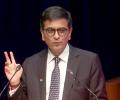
"The doctrinal error in the Krishna Iyer approach was, postulating a rigid economic theory, which advocates for greater State control over private resources, as the exclusive basis for constitutional governance," the CJI wrote in the 193-page judgment.

The Supreme Court of India has ruled that the secular nature of the state does not prevent it from interfering with religious practices and attitudes when they impede development and the right to equality in the larger public interest. The court dismissed pleas challenging the 1976 amendment to the Constitution, which added the terms "socialist", "secular", and "integrity" to the Preamble, stating that Parliament's amending power extends to the Preamble as well.
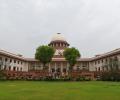
The Supreme Court of India has laid down guidelines for courts when ordering DNA tests to ascertain paternity. The court emphasized the need to balance the interests of all parties involved, including the child, parents, and other stakeholders. It also recognized the potential for infringement of privacy and the social stigma associated with illegitimate children. The court stressed that DNA tests should only be ordered when existing evidence is insufficient and when such tests are in the best interests of all parties involved.

Merely because an educational institution is regulated by a statute does not take away from it the character of a minority institution, the Supreme Court observed on Tuesday as it commenced hearing the vexed question of minority status of Aligarh Muslim University (AMU).

In its landmark verdict which held that MPs and MLAs taking bribe to vote or make a speech in the House are not immune from prosecution, the apex court said its ability to reconsider its decisions was necessary for the organic development of law and the advancement of justice. The apex court verdict overturned the 1998 judgment of the court in the JMM bribery case.

Given the possibilities that next year's assembly elections could throw up, Stalin told the state assembly that an interim report had to be submitted by January 2026. The outcomes may well find its way into the DMK's poll manifesto, thus seeking to keep the electoral focus still on the BJP-ruled Centre and Prime Minister Modi, observes N Sathiya Moorthy.
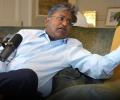
The Bombay High Court has imposed a cost of Rs 1 lakh on former cricket administrator Lalit Modi while dismissing his petition seeking an order to BCCI to pay penalty of Rs 10.65 crore imposed on him by ED for violating Foreign Exchange Management Act (FEMA).
 © 2026 Rediff.com - Advertise with us - Disclaimer - Privacy Policy - Sitemap - Feedback - About us - Terms of use - Grievances